April 20-23, 2026
Walter E. Washington Convention Center
Washington, D.C.

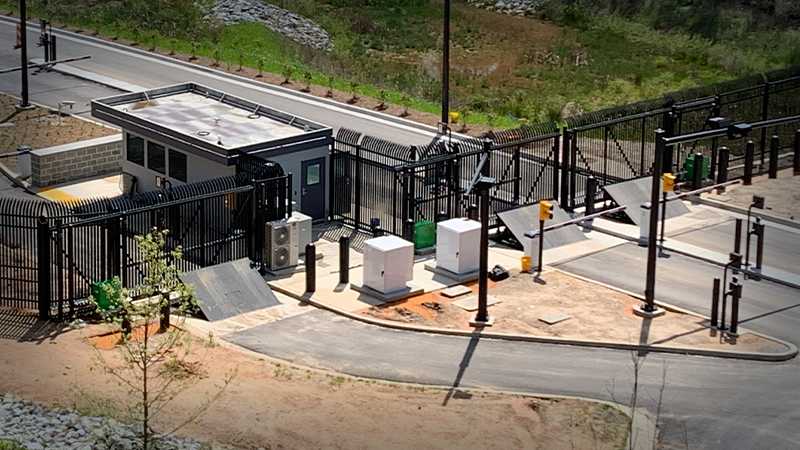
Construction is underway on a new data center. Civil work is complete, underground utilities have been installed, building construction, curbs and driveways are going in, and the project is moving forward on schedule. Then the security contractor arrives onsite to install the crash-rated perimeter fencing and vehicle mitigation systems—only to discover that the installation required for those systems extend directly into the path of newly installed underground conduits and utilities.
What seemed like a minor design detail now becomes a construction challenge that requires redesign, coordination between multiple teams, and potential project delays. Situations like this occur more often than many project teams realize—and they often stem from a simple issue: perimeter security systems were not fully thought through during the design phase.
A Common Gap in Perimeter Security Design
Modern data centers are among the most carefully engineered facilities in the world. Civil, electrical, and mechanical disciplines often produce hundreds of drawings detailing every aspect of construction and installation.
Yet when it comes to perimeter security systems—such as crash-rated bollards, high-security fencing, automated gates, and vehicle access points—project drawings sometimes include only a few overview diagrams.
In many cases, the design identifies the components needed: a fence line, a vehicle gate, or an entry/exit sally port configuration to prevent tailgating. What is often missing is the deeper planning required to ensure those components operate together as a fully integrated system.
A gate or barrier alone is simply a piece of hardware. The true functionality of a security system depends on how its components communicate and operate together. The proper sequencing of systems such as gates, active barriers, vehicle detection, safety devices, access control, and even signage and lights in most cases are a critical part of how people access the facility. Barriers and gates that are designed to stop large vehicles from penetrating need proper sequencing so that vehicles that are not a threat are not damaged. A proper sequencing system is critical to life safety just as much as providing a secure facility.
Security Systems Are More Than Physical Barriers
Effective perimeter security requires integration between multiple systems and disciplines.
For example, a vehicle gate may need to communicate with:
- Access control card readers
- Barrier arms or crash-rated barriers
- Guard station controls
- Surveillance and monitoring systems
- Control panels that manage sequencing and safety functions
When a security officer presses a control button, multiple systems may need to respond simultaneously lowering barriers, opening gates, monitoring safety loops, and coordinating vehicle flow.
Designing this level of coordination requires detailed control system planning, electrical infrastructure, and underground communication pathways between system components.
These systems often require intricate conduit runs, equipment cabinets, control panels, and protected space for electronics to operate reliably. Without early coordination between engineering disciplines, these requirements may not be accounted for in site plans.
The Sequencing Problem
One of the most frequent challenges occurs with construction sequencing.
Perimeter security systems require underground infrastructure, electrical connections, and space for control equipment. If roads, curbs, or underground utilities are installed before those requirements are fully considered, installation can quickly become complicated.
For example, plans may specify that a security gate must operate two inches above the roadway. But if a curb is installed in the wrong location, or the roadway is crowned differently than expected, the gate may not function properly without modifying newly completed work.
Similarly, installing deep foundations for crash-rated bollards or fencing after underground conduit has been installed may require excavation that disrupts other infrastructure.
When this happens, small design oversights can quickly turn into major construction challenges.
The Role of Systems Integration
These challenges are rarely the result of poor engineering or construction. Instead, they reflect the reality that perimeter security is a specialized discipline requiring coordination across multiple trades and systems.
General contractors excel at managing construction execution. Architects specialize in building design. Engineers focus on their respective disciplines.
But perimeter security solutions require someone to consider how all of these elements function together as a unified system.
That is where experienced systems integrators play a critical role.
By working with project teams during the design phase, integrators help ensure that security components, electrical systems, underground infrastructure, and operational requirements are fully coordinated before construction begins.
Designing Security Before Construction Begins
As data center construction continues to expand worldwide, physical security remains the first line of defense protecting critical infrastructure.
A well-designed perimeter security system does more than protect a facility from threats—it helps protect the project schedule by avoiding conflicts during construction.
“Perimeter security should be treated like any other critical infrastructure system,” says Tim Barnes, President of IET Systems. “When security integrators are brought into the design phase early, projects run smoother, construction sequencing works properly, and the facility ends up with a stronger security posture.”
Discover More