April 20-23, 2026
Walter E. Washington Convention Center
Washington, D.C.

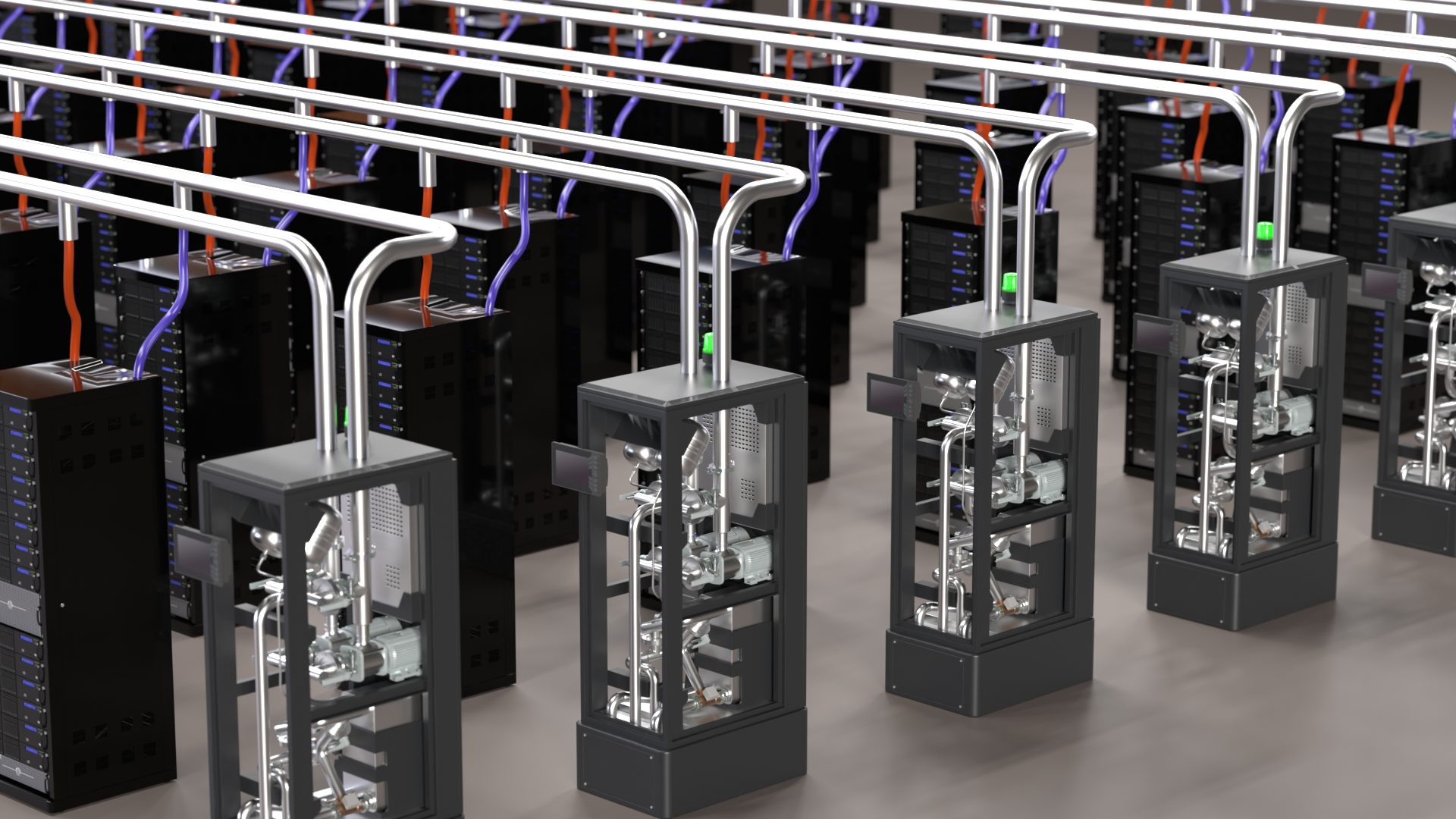
Monitoring coolant flow in real time is one of the most critical aspects of a liquid-cooling system to prevent issues like thermal throttling. The challenge is finding a reliable, scalable solution for sensing flow in pipes of varying diameters within a large-scale data center project.
ifm helps accelerate data center growth and deployment by:
- Simplifying cooling equipment with IO-Link technology, plug-and-work sensors, and reduced wiring
- Increasing access to more accurate, real-time data with smarter process sensors
ifm offers five flow-sensing technologies to increase accuracy and reliability in industrial applications. These units can be used to monitor the flow of water and other coolants,such as PG25. The units can provide flow rate data via analog output, or digital process data with additional values via the industry standard IO-Link technology. This enables collection of flow rate, total flow, media temperature, and conductivity over a single wire back to the control system.
By implementing these solutions, data centers can simplify the machine commissioning process and accelerate overall construction and deployment. Once installed, smart sensors reduce equipment failures by providing improved real-time data and more reliable performance from robust process sensors.
Accelerate Construction and Deployment of New Data Centers
Build new data centers faster and retrofit existing facilities more quickly with equipment that is easier to set up and program.
Improve machine performance
More accurate data from a digital signal improves cooling system performance, reduces downtime, and enhances digital twin predictive modeling.
Reduce server downtime
Identify subtle changes in equipment performance, from coolant quality degradation to increased pump vibration, before they are critical. Continuous asset health monitoring trends data over time to enable:
- Advanced predictive diagnostic capabilities
- Immediate intervention
- Improved cooling capacity planning
Improve Sensor Data Quality
Improved sensor data quality enables more accurate digital twins to predict and prevent unexpected outages. With real-time data and early-warning systems, you shorten reaction time and reduce potential damage, helping to extend equipment lifespan.
Improve Coolant Quality
As thermal density requirements increase, many data centers adopt innovative liquid-cooling methods, such as liquid-to-air coolant distribution units (CDUs), liquid-to-liquid CDUs, and liquid-immersion systems. Data centers can monitor coolant health in real time by implementing oil humidity, flow, or conductivity sensors. With continuous insight into coolant degradation, facilities can optimize maintenance schedules and keep machines running at peak performance even longer.
Reduce risks
With innovation moving faster than industry standards, reduce equipment design risk by selecting future-proof technologies from suppliers that prioritize interoperability. Safeguard your supply chain by partnering with suppliers with a reputation for quality products and the established production capacity to meet high-volume demand.
Meet sustainability goals
More efficient cooling systems reduce excessive energy and water consumption. Optimize equipment loads to reduce wasted consumption, identify opportunities to repurpose heat, and collect better data to calculate Water Usage Effectiveness (WUE) and Power Usage Effectiveness (PUE).
CONCLUSION
Data Centers can ensure optimal performance, reliability, and efficiency of server equipment by increasing access to process data that enables real-time monitoring.
Discover More